
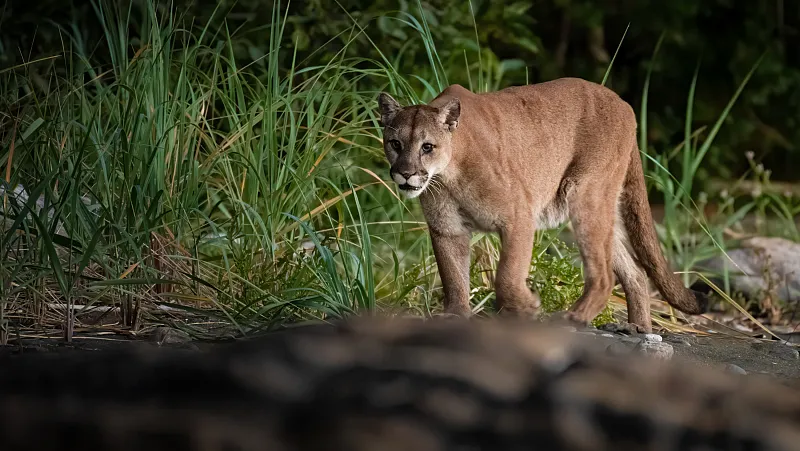
A mountain lion (puma concolor) spotted near the north end of Vancouver Island, BC, Canada. Photo courtesy of and copyright Jarrett Lindal of Jarrett Lindal Media. All rights reserved.
Innovative Wild Cat Conservation
Preserving Local Ecosystems & Protecting The Natural World
What wild cats are in your region?
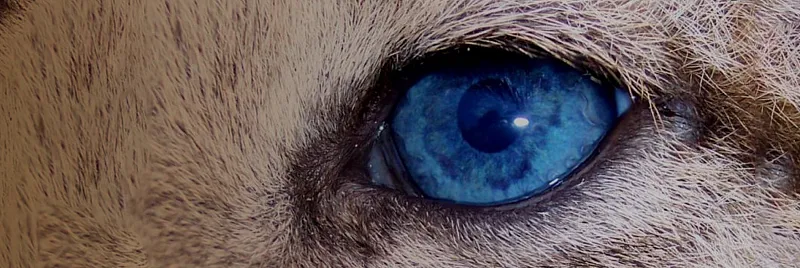
The deep blue eyes of a puma kitten.
How Can We Live With Wild Cats Safely?
Felidae are found all over the world (except in Antarctica and Australia). Since they are so widespread, we need to recognize that where our cities and suburbs meet the wilderness, there are cats.
There are ways to live with them safely, for their protection and our own. It is up to us to be responsible in our interactions with these majestic cats.
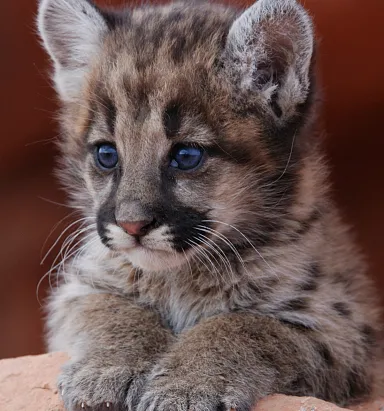
A puma (also known as mountain lion) kitten.
You Can Help Us Protect Wild Cats
Humans are responsible for the destruction of wild cats’ ecosystems, but with the help of generous donors like you, we are hard at work to change that.
You can help us preserve our natural ecosystem and live safely alongside wild cats. Over 90% of your donation goes directly to our programs which help us conserve critical wild cat habitats around the world.
Donate Today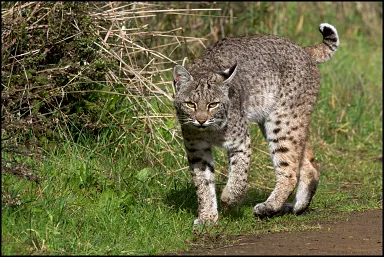
Bobcat Photo Courtesy of Trish Carney.
Healing Our Relationship With Wild Cats At The Urban Edge
We believe in a future where we protect these important members of our local ecosystems. We can live safely alongside them!
Felidae Conservation Fund uses innovative research, education, and technology to heal the relationship between humans and all types of wild cats. Especially where our worlds collide: the urban edge. To do this, we use a combination of forward-looking research and education. We want to show you that big cats can be a benefit to humanity and drive meaningful change in the natural world.
What Can You Do To Make A Difference Today?
Humans are the biggest factor in the destruction of wild cats’ ecosystems. As our urban edge expands, we take up their homes and force them into new areas. Wild cats then might hunt livestock or be seen in neighborhoods. This can be upsetting for humans.
Humans pose the greatest threat to the felidae populations. But we also have many opportunities to help wild cats across the world! If you want to protect our local ecosystems and make a difference in the natural world, you can get involved with us to help spread information on how to live safely with wild cats and support our mission.


